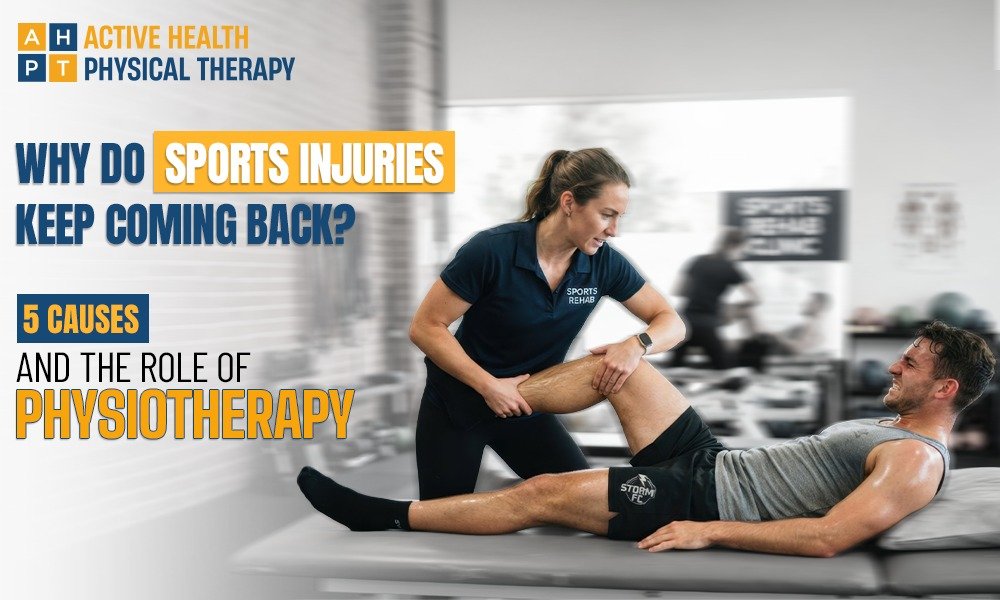
Recurring sports injuries can result from incomplete tissue recovery, inadequate rehabilitation, excessive training loads or physical limitations that remain unaddressed. A reduction in pain does not always indicate that the injured muscles, tendons or joints have regained the capacity to withstand the demands of sport. Returning to intense activity without restoring the necessary strength, stability and movement control can increase the risk of another setback.
Repeated pain, however, does not always mean the original injury has returned. Identifying the underlying cause is essential for determining the appropriate treatment & preventing avoidable interruptions to training. A sports injury therapist can assess the factors contributing to recurring symptoms and help determine the rehabilitation required for recovery. The following sections examine five common causes of recurring sports injuries and explain how physiotherapy can address these issues through exercises, progressive strengthening and rehabilitation to support a safer return to activity :-
5 reasons why sports injuries keep coming back
1. Returning to sport before the injury has recovered adequately
One of the main reasons sports injuries recur is returning to training before the injured area can tolerate the demands of the sport. Less pain does not always mean the body is ready for sports. The muscles and joints may still need to regain their strength, stability & control.
For e.g., a person recovering from a hamstring injury may walk without pain – but feel discomfort while sprinting. Similarly, someone with an ankle injury may walk normally – but struggle with jumping or changing direction quickly. Returning to sports too soon can put too much pressure on the injured area and increase the risk of another injury.
What needs attention :-
- assessing strength and movement in relation to the original injury
- gradually reintroducing running, jumping, pivoting or other sport-specific movements
- checking how the injured area responds during activity and during recovery afterwards
- increasing training demands according to functional progress rather than pain relief alone
Return-to-sport decisions should account for the type of injury, the physical demands of the sport and the athlete’s progress. Recovery is a gradual process – not simply a decision to resume activity after a fixed number of rest days
2. Stopping rehabilitation as soon as the pain subsides
Pain often encourages people to seek treatment – so its reduction can become the main measure of recovery. However, the body may continue to have strength, balance & movement deficits even after the initial symptoms improve.
Consider an ankle sprain. Rest & appropriate injury massage therapy may reduce swelling and discomfort, allowing the person to walk comfortably. However, the injury may also affect balance & continuing appropriate exercises after returning to sport, particularly when recommended for injury-specific prevention
Exercise-based rehabilitation can help reduce recurrent ankle sprains, particularly when it includes balance and coordination training. The appropriate exercises, however, depend on the injury and the individual’s recovery needs the ability to sense the ankle’s position during movement. Returning to sports that involve quick turns or uneven landings without addressing these deficits can increase the risk of another sprain.
Similar concerns apply to muscle strains & knee injuries. Stopping rehabilitation before the necessary physical abilities have been restored can leave an athlete unprepared for repeated or high-intensity movements.
What needs attention :-
- completing the prescribed rehabilitation programme rather than relying on symptom improvement
- rebuilding strength and endurance in the affected muscles
- restoring balance, coordination and control where required
- continuing appropriate exercises after returning to sport – particularly when recommended for injury-specific prevention
Exercise-based rehabilitation can help reduce recurrent ankle sprains, particularly when it includes balance and coordination training. The appropriate exercises, however, depend on the injury and the individual’s recovery needs
3. Increasing training intensity or volume too quickly
Training improves physical capacity when the body receives an appropriate workload and enough time to adapt. Problems can arise when training duration, intensity or frequency increases too quickly – particularly after an injury or an extended break.
An athlete might return to running with short, comfortable sessions but increase distance and speed within a few days. A football player may resume full training and matches in the same week – while a weightlifter may return to previous lifting loads without rebuilding tolerance gradually.
In these situations, the workload may exceed the recovering tissues’ current capacity. Fatigue can also affect movement control and the ability to maintain technique during repeated efforts. Poor management of training and competition loads as an important consideration in sports injury risk.
What needs attention :-
- tracking training frequency, duration and intensity
- increasing one or more training demands gradually, according to recovery and tolerance
- allowing appropriate recovery between demanding sessions
- adjusting the programme when pain, swelling, unusual fatigue or declining performance develops
Training should progress according to the athlete’s response – rather than following a rigid schedule that may not reflect their recovery
4. Persistent weakness, reduced mobility or poor movement control
An injury can affect more than the area where pain is felt. Muscle weakness, restricted joint movement, reduced balance & changes in coordination may influence how the body performs a sporting task. These limitations can remain after the initial injury has settled.
For example, reduced strength around the knee may affect an athlete’s ability to control landing and deceleration. Limited ankle mobility may make certain movements more difficult – while reduced shoulder strength and control may affect repeated throwing or overhead activity.
However, a movement difference does not automatically mean that it caused the original injury. A physiotherapy assessment helps determine which limitations are relevant to the individual’s symptoms, sport and functional goals.
What needs attention :-
- comparing the injured side with the uninjured side where appropriate
- assessing relevant muscle strength, joint mobility, balance & coordination
- identifying limitations during sport-specific movements
- prescribing targeted exercises to address the deficits identified during assessment
A structured rehabilitation plan should focus on the athlete’s actual functional needs instead of applying the same exercises to every injury
5. Treating symptoms without reassessing the underlying problem
Repeated pain in the same area does not always mean the original injury has returned. The symptoms may reflect incomplete recovery, a new injury, excessive loading or a different condition that requires further assessment.
For instance, recurring knee pain may involve several possible structures or contributing factors. Repeatedly managing discomfort without reviewing the symptoms, movement limitations and response to activity may delay appropriate treatment.
Hands-on injury massage therapy can sometimes help manage pain or muscle tightness, but symptom relief alone does not establish whether an athlete is ready to resume full training. Persistent or worsening symptoms require a closer assessment and some injuries may need medical evaluation or diagnostic imaging.
What needs attention :-
- reviewing the injury history and the circumstances in which symptoms return
- reassessing movement, strength and functional limitations
- adjusting treatment when the athlete is not progressing as expected
- referring for medical evaluation when symptoms suggest a more significant injury or another underlying condition
Repeated flare-ups should be treated as a reason to reassess the recovery plan – rather than simply repeating the same treatment
How can physiotherapy help manage sports injuries & reduce recurrence
Physiotherapy addresses the injury and the physical limitations that may prevent a safe return to activity. Treatment depends on the type and severity of the injury, the athlete’s current abilities & the demands of their sport. A structured programme followed by an expert sports injury therapist may include the following components :-
|
Physiotherapy component |
How it supports recovery |
|
Initial assessment |
helps identify symptoms, functional limitations and relevant factors affecting recovery |
|
Pain management |
helps manage symptoms so appropriate movement and rehabilitation can begin or progress |
|
Mobility exercises |
address restricted joint movement or muscle flexibility when these limitations affect function |
|
Progressive strengthening |
rebuilds muscle capacity and the ability to tolerate the forces involved in sport |
|
Balance and coordination training |
improves control during movements that require stability and changes in body position |
|
Sport injury massage therapy |
prepares the athlete for the movements and physical demands required during training and competition |
|
Return-to-sport planning |
helps guide the transition from rehabilitation to training and full participation |
When should you consult a sports injury therapist
Consult a sports injury therapist if you experience any of the following :-
- Recurring pain in the same area: symptoms repeatedly return after rest or when you resume training
- Persistent swelling or stiffness: the affected joint or muscle remains swollen, stiff or uncomfortable despite appropriate rest
- Reduced strength or mobility: you struggle to lift weights, run, jump or perform movements that were previously manageable
- Unsteadiness during activity: your ankle, knee or another joint feels unstable during changes in direction, landing or other sports movements
- Limited progress during recovery: symptoms persist or return despite following your rehabilitation programme
- Difficulty returning to sport: you can manage everyday activities but cannot comfortably perform the movements or intensity required by your sport
Note: Seek prompt medical attention following a significant injury involving severe pain, substantial swelling, visible deformity or an inability to bear weight. Early evaluation helps determine whether physiotherapy is appropriate or whether further medical investigation is needed
Take the right steps towards lasting sports injury recovery
Recurring sports injuries may indicate that the body has not fully recovered and it needs more rest & time. A professional assessment can help identify the cause and determine the right treatment – including physiotherapy, strengthening exercises or injury massage therapy. A qualified sports injury therapist can also guide your return to training and address physical limitations that may increase the risk of another setback.
At Active Health Physical Therapy, we provide personalised sports rehabilitation to help you restore movement, rebuild strength & return to your preferred activities. As a leading physiotherapy clinic in Windermere, we welcome patients at our Edmonton clinics on Ellerslie Road SW and Victoria Trail NW, Edmonton, AB.
Our approach focuses on :-
- identifying factors that may contribute to recurring injuries
- improving strength, mobility and movement control through personalised rehabilitation
- supporting a gradual return to sports and regular physical activity
Connect with our team to book your assessment and discuss a recovery plan suited to your needs!