Sports injuries directly affect how muscles function, how joints move and how quickly the body can return to activity. While rest and basic stretching are often the first steps people take – they usually do not address deeper issues like muscle tightness, reduced circulation & movement restrictions.
For proper recovery, the body needs good healing, better blood flow and normal movement again. Therapeutic massages help by working on tight muscles and problem areas as part of a sports therapy plan. Through this approach, circulation improves, muscle tension reduces and the overall repair process becomes more efficient at a deeper level.
When applied by experienced sports physiotherapists – this approach also helps correct imbalances and improve overall muscle function. As a result, recovery becomes more consistent & the chances of recurring injuries are significantly reduced.
What is therapeutic massage in sports physiotherapy
To begin with, therapeutic massage in a clinical setting is very different from a relaxation massage. Here, the goal is not comfort. It is recovery.
In practice, sports physiotherapists use specific techniques to:-
- Target tight muscle fibres – this helps release deep tension that restricts movement and causes imbalance
- Work on trigger points – these are sensitive areas in muscles that often refer pain to other parts of the body
- Improve tissue mobility – this allows muscles and joints to move freely without compensation
At the same time, this is usually combined with exercise therapy because massage alone does not fix the problem. It prepares the body for proper movement.
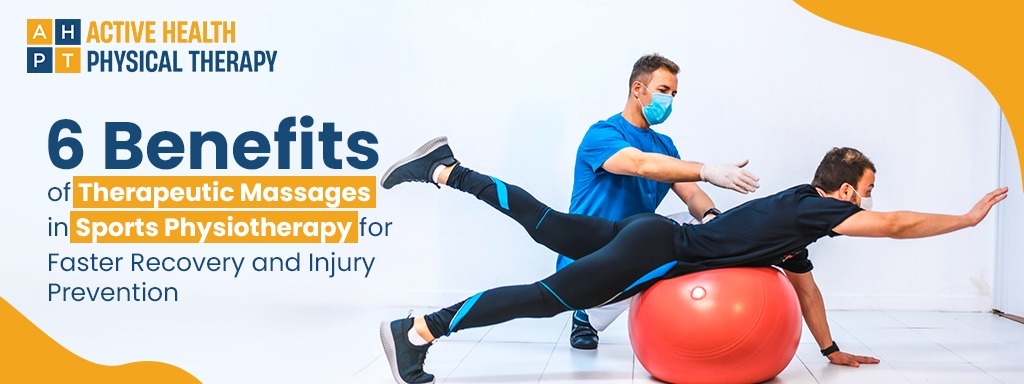
6 benefits of therapeutic massages in sports physiotherapy
1. Helps reduce muscle tightness & improve mobility
Tight muscles are one of the most common reasons behind restricted movement and recurring injuries. Massage:-
- Loosens deep muscle layers – this improves flexibility in areas where stretching alone doesn’t work
- Restores normal movement patterns – this reduces unnecessary strain on joints during activity
As a result, athletes & active individuals can move more efficiently and safely
2. Improves blood circulation and speeds up healing
Next, proper blood flow plays a major role in how fast your body recovers. Massage:-
- Increases circulation in injured areas – this delivers oxygen and nutrients needed for tissue repair
- Helps remove metabolic waste – this reduces inflammation and muscle fatigue after activity
Because of this, the recovery time after strains or overuse injuries can improve significantly
3. Helps manage pain without over-dependence on medication
Many people take painkillers but don’t treat the actual reason behind the pain. Massage:-
- Reduces muscle tension that triggers pain signals – this directly lowers discomfort levels
- Relaxes the nervous system – this helps in reducing chronic pain patterns over time
So instead of masking pain, it works on the source of the issue
4. Breaks down scar tissue and improves tissue flexibility
After any injury, your body naturally forms scar tissue but this tissue is less flexible. Massage:-
- Helps soften and realign scar tissue fibres – this improves how the muscle behaves during movement
- Prevents stiffness from building up over time – this reduces long-term mobility issues
Without this step, many people feel “tight” months after an injury, even if pain is gone
5. Supports injury prevention by correcting muscle imbalances
Often, injuries develop over time due to imbalance. Massage:-
- Identifies overworked or tight muscle groups – these areas are usually compensating for weaker ones
- Helps restore balance in the body – this allows muscles to function the way they are supposed to
This is especially important for runners, gym-goers & athletes who repeat the same movements regularly
6. Helps faster recovery after training and reduces soreness
Finally, regular training puts constant stress on muscles, which leads to soreness and fatigue. Massage:-
- Reduces delayed onset muscle soreness – this helps you recover between sessions
- Prepares muscles for the next activity – this lowers the risk of overload injuries
Many athletes include massage as part of their routine recovery plan
When should you consider therapeutic massage in a sports clinic
In most cases, people wait too long before seeking help. However, early signs should not be ignored.
You should consider visiting a sports clinic if:-
- Tightness keeps coming back
- Pain repeats in the same area
- Movement feels restricted
- Soreness lasts longer than expected
Addressing these signs early can prevent more serious injuries later
Why therapeutic massage works best with sports physiotherapy
While massage is helpful, it is not a complete solution on its own:-
- Firstly, massage provides short-term relief – It reduces pain and improves mobility temporarily
- Secondly, exercise-based rehab builds long-term strength – This prevents the issue from returning
A well-made sports therapy plan should combine both approaches
Advanced Physiotherapy Care for Better Recovery
Overall, therapeutic massage plays a meaningful role in recovery when used the right way. It helps reduce pain, improve mobility & support healing while also preparing the body for proper rehabilitation.
At Active Health Physical Therapy Clinic, our sports physiotherapists focus on delivering complete, result-driven care rather than just temporary relief. With our centres located in Windermere and Victoria Trail, Edmonton – we make advanced physiotherapy accessible to a wider community. Our approach combines hands-on treatment with specialized rehabilitation to ensure long-term recovery and improved performance.
Along with sports therapy – we also offer a wide range of therapies designed to address different types of injuries, pain conditions and mobility concerns. By working closely with each individual through personalized plans, we focus on helping the body recover properly and move better over time.
FAQs
- Can ‘Therapeutic Massages’ help prevent the risk of sports injuries?
Yes, it helps by improving muscle balance, flexibility and movement patterns – which reduces injury risk over time - Is massage enough for sports injury recovery?
No, it should be combined with strengthening and movement exercises for complete and long-term recovery - How to know if sports physiotherapy is needed?
If pain, tightness or mobility issues keep returning – it’s a sign your body needs proper assessment and guided treatment