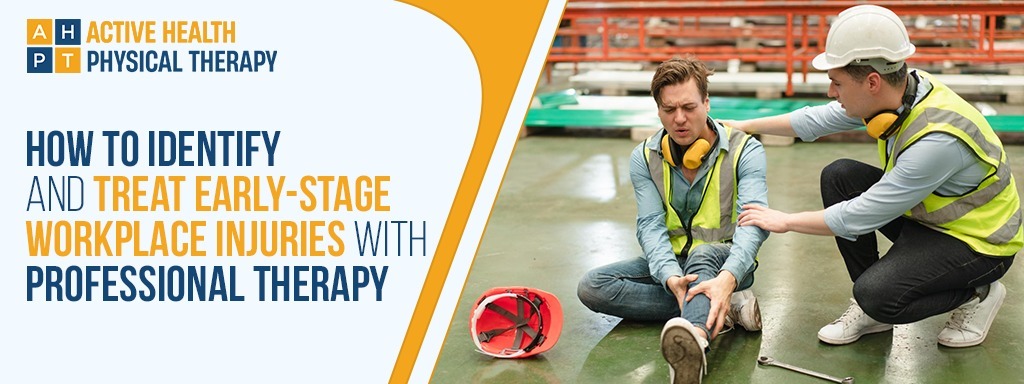
Early-stage injuries at work often develop due to repeated strain on the body. Long hours in one posture, continuous screen use or repetitive physical tasks gradually put pressure on muscles & joints. As a result, the body starts showing small but important signs such as stiffness, mild discomfort & fatigue in specific areas. These signals are often dismissed as routine tiredness which delays timely action and increases the risk of a deeper workplace injury.
Over time, when these early symptoms are not addressed – the body begins to compensate in unhealthy ways leading to muscle imbalances, restricted movement and eventually persistent pain. This makes it important to understand not just the symptoms but also what they indicate.
By identifying these early changes and responding with professional therapy – it becomes possible to prevent long-term damage, reduce recovery time and maintain consistent physical function at work.
Early Signs of Workplace Injuries
Early-stage injuries are subtle and that’s exactly why they get missed. They don’t stop you from working but they slowly reduce how well your body functions.
Common symptoms to watch for:-
- Persistent tightness in the neck, shoulders or lower back especially after work
- Discomfort during routine tasks like sitting, typing or lifting
- Reduced range of motion like difficulty turning your neck fully
- Muscle fatigue in specific areas even without heavy physical work
What’s happening here is micro-strain. Repetitive movements or poor posture create small stress points in muscles & joints. Over time, the body starts compensating and that’s when imbalance begins. Many people think pain is the first warning. In reality, loss of ease in movement shows up much earlier.
Risks of Ignoring Early-Stage Workplace Injuries
Ignoring an early workplace injury is where most people go wrong. The body doesn’t just “fix itself” if the root cause is still there.
The progression usually looks like this:-
- A small strain becomes a recurring discomfort
- Other muscles start compensating for the weak area
- This leads to imbalance and added pressure on joints
- Eventually, it turns into chronic pain or restricted movement
Early intervention can reduce recovery time by up to 50%. Waiting only makes treatment longer and more complicated.
Role of Professional Therapy in Workplace Injury Treatment
Instead of guessing or relying on temporary relief methods, professional therapy focuses on identifying the exact cause and correcting it:-
1. Accurate Assessment and Diagnosis
A trained physiotherapist looks at:
- Movement patterns
- Posture habits
- Work-related strain
In many cases, a workplace ergonomic assessment is done to understand how your daily environment is contributing to the issue.
2. Personalized Treatment for Better Recovery
No two people have the same routine or body mechanics. That’s why personalized treatment plans are important.
These plans are based on:-
- Your job role (desk job vs physical work)
- Severity of the issue
- Movement limitations
Instead of generic exercises – you get targeted therapy that works for your specific condition.
3. Importance of Injury Massage Therapy
Injury massage therapy plays a very specific role in recovery:-
- Release tight muscle bands
- Improve blood circulation
- Reduce inflammation in affected areas
4. Long-Term Recovery and Prevention
The goal is to:-
- Restore proper movement
- Strengthen weak areas
- Correct posture and habits
This prevents the same injury from coming back again.
When to Seek Professional Help?
If something keeps coming back – it needs attention. You should consider professional therapy if:-
- Pain lasts more than a few days
- Discomfort returns after every workday
- Movements feel restricted or weaker
- Daily tasks start feeling harder than usual
Early action is always easier than long recovery. What takes weeks to fix now can take months later.
Choose the Right Physiotherapy Support
Early care of workplace injury should focus on identifying the root cause & correcting it properly. At Active Health Physical Therapy, we approach recovery with this exact mindset.
With advanced treatment methods and experienced physiotherapists, we are proud to be one of the most trusted and well-equipped clinics in Edmonton, serving patients across both Windermere (South) and Victoria Trail (North). We offer a wide range of therapies designed for different types of injuries – whether they are related to posture, sports, workplaces, accidents or everyday strain.
We help you recover in a way that is effective, safe and long-lasting. With the right guidance, timely care and a professional approach – recovery becomes smoother and helps you return to your routine without recurring issues.
FAQs
- How do I know if my pain is a workplace injury or just tiredness?
If the discomfort keeps returning in the same area or affects your movement – it’s likely more than just fatigue. - Can early-stage workplace injuries heal without therapy?
Some minor strains may improve but if the cause (posture, repetition) remains. The problem usually returns or worsens over time.
3. How long does it take to recover from early-stage workplace injuries?
With early professional therapy – many cases improve within a few weeks. Delayed treatment can extend recovery to months.